
Location
6 Napier Road #05-03,
Gleneagles Medical Centre,
258499, Singapore
Contact Us
| Phone |
: +65 6732 6503 |
| : info@tanurology.com.sg |

Consultant Urologist
MBBS, MRCS(EDIN), MMED(SURG), FRCS(UROL) (RCPSG), FAMS(UROL)
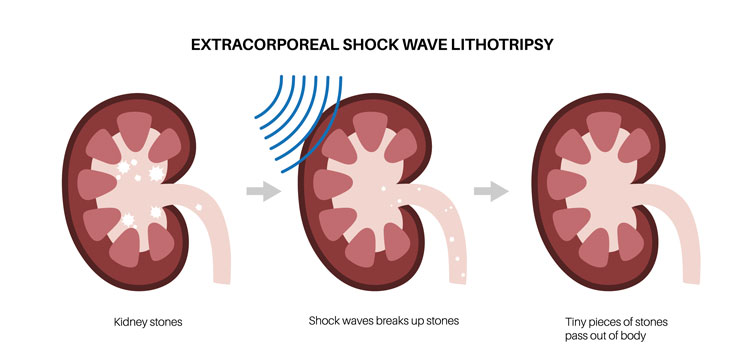
When kidney stones cause discomfort or begin to interfere with daily life, surgery is not always necessary. One non-invasive option is extracorporeal shock wave lithotripsy (ESWL), a treatment that uses focused sound waves to break stones into smaller fragments. These fragments can then pass naturally through the urinary tract, helping relieve symptoms while avoiding surgical intervention.
What Is Extracorporeal Shock Wave Lithotripsy (ESWL)?
Extracorporeal shock wave lithotripsy (ESWL) is a non-invasive treatment for kidney and ureteral stones. The procedure uses focused shock waves to break the stone into small fragments that can pass naturally in the urine, often avoiding the need for surgical removal. Because no incisions are involved, ESWL typically causes less discomfort and allows for a quicker recovery compared to surgical procedures.
Who Is ESWL Suitable For?
ESWL may be recommended for individuals who:
- Have stones in the kidney or upper ureter
- Have small to medium-sized stones
- Are experiencing pain, bleeding, or urinary blockage due to stones
- Prefer a non-invasive treatment option
- Are not suitable candidates for more invasive procedures because of underlying medical conditions
Get personalised advice from a urologist on whether ESWL is the right option for you.
How Does the ESWL Procedure Work?
ESWL is performed in a series of carefully planned steps to ensure safety, comfort, and effective stone fragmentation. Here is what you can expect before, during, and after the procedure.
Pre-procedure Preparations
Medical Assessment
Your doctor will review your medical history, current medications, and imaging studies such as a CT scan, ultrasound, or X-ray. This helps confirm whether ESWL is appropriate for your specific stone and overall health.Consent
Once ESWL is deemed suitable, the procedure, potential risks, and alternative treatments will be explained to you. You will then be asked to provide informed consent before proceeding.Preparation
You may be advised to fast, adjust certain medications, and undergo routine checks to ensure the procedure can be carried out smoothly and safely.
During the Procedure
Positioning and Anaesthesia
You will be positioned on the lithotripter, either on your back or stomach, depending on the stone’s location. Sedation or general anaesthesia is administered to keep you comfortable and still throughout the session.Locating the Stone and Delivering Shock Waves
Ultrasound or X-ray imaging is used to identify the exact position of the stone. A gel or water interface is applied to the skin to allow effective transmission of shock waves. Controlled pulses are then delivered, gradually increasing in intensity to fragment the stone, while your vital signs and stone position are closely monitored.Completion
Once the stone has been adequately broken down, the procedure is completed and you will be moved to a recovery area for observation.
Post-procedure Care
Initial Recovery
After ESWL, you will remain in the recovery area until the effects of sedation wear off. Nursing staff will monitor your comfort and vital signs. If you experience cramping, discomfort, or nausea, medication can be provided. Most patients can return home on the same day.Home Care and Follow-up
Before discharge, you will receive guidance on fluid intake, activity levels, and symptoms to watch for during recovery. A follow-up appointment is usually scheduled within a few weeks, often with imaging such as an ultrasound or X-ray to confirm that the stone has fragmented and that most pieces have passed.
What Are the Benefits of ESWL?
ESWL offers several practical advantages for patients:
- No Incisions – The treatment is performed entirely from outside the body, so no surgical cuts are required.
- Lower Infection Risk – Since no incision is made, the risk of infection is reduced compared to surgical options.
- Quick Recovery – Most patients return home the same day and resume normal activities within a few days.
- Lower Overall Cost – As an outpatient procedure, ESWL helps minimise hospital stay and related expenses.
- Can Be Repeated (If Needed) – Additional sessions may be performed if any stone fragments remain.
What Are the Potential Risks or Complications?
While ESWL is generally safe, some possible risks include:
- Pain or Discomfort – Flank or abdominal pain may occur during the procedure and later as stone fragments move through the ureter.
- Blood in the Urine – Temporary haematuria is common and usually resolves within a few days.
- Bruising or Swelling – Mild bruising may appear on the skin where the shock waves were applied.
- Incomplete Stone Fragmentation – Some stones may not break fully and may require a repeat ESWL session or another form of treatment.
Expert ESWL Care for Kidney Stones at Tan Urology
Living with kidney stones can be disruptive and uncomfortable, but treatment does not always have to involve surgery. For suitable patients, ESWL offers a way to address stones while minimising disruption to everyday life, recovery time, and hospital stay. The key lies in proper assessment, stone selection, and careful planning to ensure the best possible outcome.
At Tan Urology, we provide comprehensive evaluation and evidence-based guidance to determine the most appropriate treatment for each individual. Dr Lincoln Tan brings extensive expertise in the management of kidney stone disease, with a strong focus on safety, effectiveness, and long-term stone prevention. Speak with our urologist to determine whether ESWL is the right option for you and to receive personalised guidance tailored to your condition and health needs.
Frequently Asked Questions (FAQs) About ESWL
Our Urologist
Dr Lincoln Tan
FRCS(UROL) (RCPSG), FAMS(UROL)
Dr Lincoln Tan is a consultant urologist and accredited robotic surgeon at Mount Elizabeth Hospital. His clinical practice includes extracorporeal shock wave lithotripsy (ESWL) as well as minimally invasive techniques for managing urinary stones and related complications. Dr Tan places emphasis on patient-centred care, taking time to listen, explain treatment options clearly and support patients through each stage of their management.
Let us help you recover to a stone-free life.
Location
6 Napier Road #05-03,
Gleneagles Medical Centre,
258499, Singapore