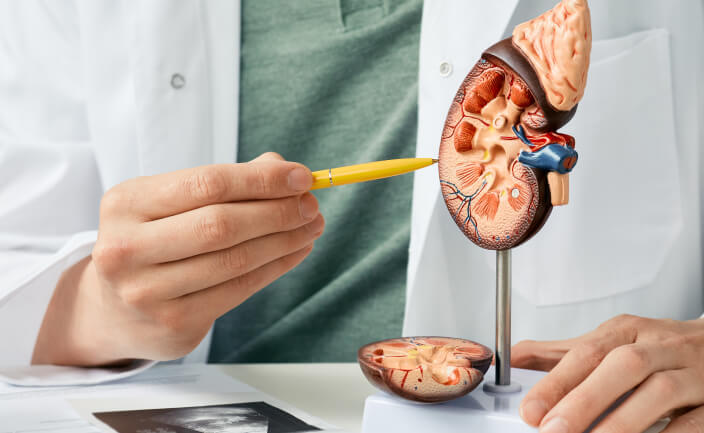

What Are Kidney Stones?
Many stones can remain in the kidney and cause no noticeable issues. Trouble begins when a stone moves into the ureter, the narrow tube that drains urine from the kidney to the bladder. Because the ureter is not designed to accommodate solid objects, even a small stone can obstruct urine flow, triggering significant pain and other symptoms that often require medical assessment.
What Do Kidney Stones Feel Like?
The pain associated with kidney stones is often described as one of the most intense pains a person can experience. It is rarely a dull ache but a sharp, cramping sensation that can escalate rapidly and feel overwhelming.
The location of the kidney stone pain provides clues as to where the stone is currently situated:
- Back or Side (Flank): Discomfort usually begins high in the back or along the side, just beneath the ribs. This corresponds to the kidney or the upper ureter, where pressure builds as urine flow becomes obstructed.
- Radiating to the Front: As the stone travels lower, the pain commonly shifts towards the lower abdomen and groin. In men, it may extend into the testicles, while women may feel it deep in the pelvis.
A defining feature of kidney stone pain is its wave-like pattern. The ureter contracts rhythmically in an attempt to move the stone along, leading to periods of escalating pain followed by brief relief. These episodes can be severe enough to prompt an emergency visit.
What Are the Symptoms of Kidney Stones?
The full spectrum of symptoms can vary depending on the stone’s size, its exact position and the degree of blockage it causes. Very small stones may pass unnoticed, but larger ones can produce a range of distressing signs.
The duration of kidney stone pain usually persists until the stone reaches the bladder or is medically treated. This can take hours, days or, in some cases, longer, depending on how the stone behaves.
Common symptoms include:
- Haematuria (Blood in Urine): As a stone moves, it can irritate or scratch the lining of the urinary tract. This may result in urine that appears pink, red or brown, or blood that is only detectable through laboratory testing.
- Urinary Urgency and Frequency: When a stone enters the lower ureter, it can irritate the bladder, creating a constant sensation of needing to pass urine, even when little comes out.
- Nausea and Vomiting: The kidneys share nerve pathways with the digestive system. As a result, severe pain often triggers nausea and, in some cases, vomiting.
- Fever and Chills: A blocked urinary tract combined with infection can lead to serious complications such as pyelonephritis or sepsis. Fever and chills alongside pain require immediate medical attention and may indicate the need for urgent kidney stone surgery.
What Causes Kidney Stones?
The formation of kidney stones is influenced by several interacting factors, including diet, genetics and environment. Although the exact cause can differ from one individual to another, several well-recognised risk factors increase the likelihood of stone development:
- Inadequate Fluid Intake: The most common cause is chronic dehydration. When fluid intake is low, the urine becomes more concentrated with minerals that can crystallise and form stones.
- Dietary Factors: A diet high in salt, animal protein and sugar can increase the excretion of calcium and uric acid, promoting stone formation. Conversely, consuming too little calcium can also raise risk, as dietary calcium helps bind oxalate in the gut before it reaches the kidneys.
- Medical Conditions: Certain conditions, including recurrent urinary tract infections, gout, chronic diarrhoea and disorders affecting calcium metabolism, can increase the likelihood of stone formation.
- Family History: If a close relative has had stones, your risk of developing them is significantly higher, suggesting a strong genetic component.
Taking the Next Step Towards Relief
If you are experiencing symptoms that may point to kidney stones, seeking timely medical advice can help prevent unnecessary pain and complications. An early review by a urologist helps clarify what is causing your pain, explore the most appropriate treatment options and guide you towards a smoother, more comfortable recovery.
Reach out to us to book a consultation with a kidney stone specialist and take a confident step towards lasting relief and peace of mind.